
Nigeria Local Content Law: Guide for Foreign Oil & Gas Firms
- Introduction
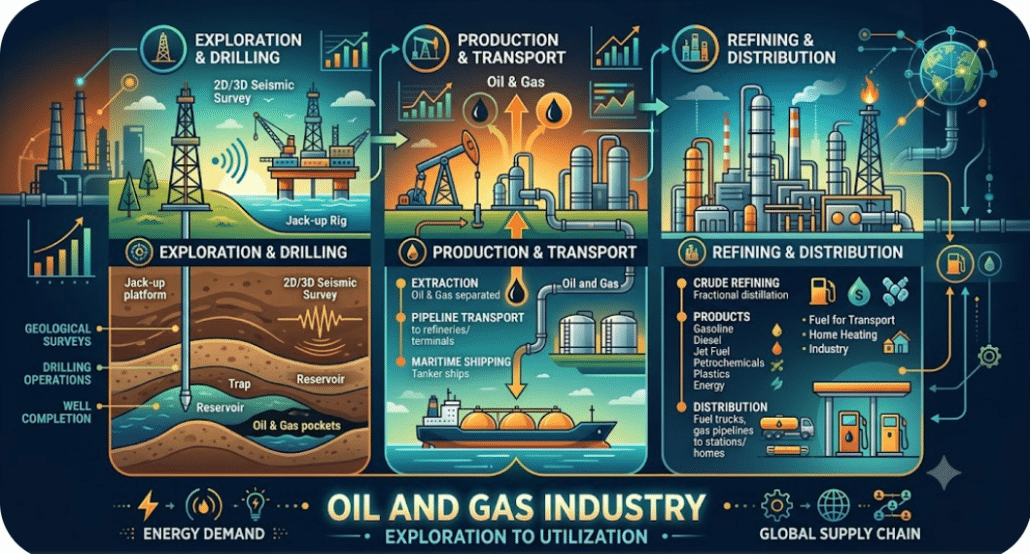
Nigeria remains one of the most attractive destinations for oil and gas investment in Africa, holding vast proven reserves of crude oil and natural gas and offering opportunities across the upstream, midstream and downstream segments of the industry. For decades, however, the benefits of this resource wealth accrued disproportionately to foreign operators, with limited value retained within the domestic economy. The Nigerian local content regime was conceived to correct this imbalance, and it now forms one of the most consequential legal frameworks that any foreign company must reckon with before entering the sector.
For international oil companies, engineering, procurement and construction contractors, oilfield service providers and equipment manufacturers, an understanding of Nigeria’s local content requirements is not a peripheral compliance exercise. It is a threshold condition for lawful participation in the industry, and it materially shapes how foreign entities structure their Nigerian operations, their contracts, their staffing and their long-term commercial strategy. This article sets out the key legal requirements that foreign companies ought to understand before, and while, doing business in Nigeria’s oil and gas sector.
- What Is Local Content?
Section 106 of the Nigerian Oil and Gas Industry Content Development Act 2010 (the NOGICD Act) defines “Nigerian Content” as the quantum of composite value added to, or created in, the Nigerian economy through a systematic development of capacity and capabilities achieved by the deliberate utilisation of Nigerian human, material resources and services in the Nigerian oil and gas industry. The underlying objective is to ensure that a meaningful share of the economic activity generated by oil and gas operations, whether in the form of employment, procurement, technology or capital investment, is retained within Nigeria rather than exported alongside the resource itself.
The NOGICD Act in section 2 requires every regulatory authority, operator, contractor, subcontractor and alliance partner involved in any project, operation, activity or transaction in the industry to treat Nigerian content as an important element of its overall project development and management philosophy for project execution. For foreign investors, the regime represents both a compliance obligation and, when properly understood, a route to durable and well-regarded operations within the country.
- Legal And Regulatory Framework
The principal legislation governing local content in the Nigerian petroleum industry is the NOGICD Act 2010, which commenced on 22 April 2010.
The Act created the Nigerian Content Development and Monitoring Board (NCDMB) as the body responsible for implementing, monitoring, coordinating and enforcing Nigerian content compliance. In carrying out this mandate, the NCDMB has issued various regulations, guidelines, circulars and implementation directives to facilitate compliance with the Act. These include, among others, guidelines on Nigerian Content Plans, expatriate quota utilisation, project categorisation, community content, and the Nigerian Content Equipment Certificate (NCEC). Foreign companies should therefore ensure that they comply not only with the provisions of the NOGICD Act but also with the applicable directives and guidelines issued by the NCDMB from time to time.
Foreign companies should also take note of the Petroleum Industry Act, 2021, which restructured the governance, administrative and fiscal framework for the petroleum industry and complements the local content regime in areas such as licensing, host community development, and regulatory oversight. Together, these instruments constitute the principal legal framework governing local content compliance in Nigeria’s oil and gas sector.
- Who Must Comply?
The obligations under the NOGICD Act as stated in section 2 are broadly drawn and apply to all:
- regulatory authorities;
- operators;
- contractor;
- subcontractors;
- alliance partners; and
- other entities involved in any project, operation, activity or transaction in the Nigerian oil and gas industry.
“Operator” is itself widely defined under section 106 to mean the Nigerian National Petroleum Company, its subsidiaries and joint venture partners, and any Nigerian, foreign or international oil and gas company operating in the industry under any petroleum arrangement, while “Partner” is defined to mean any foreign company working on a project in partnership with, or as a major contractor to, an operator.
In practice, this captures international oil companies, engineering, procurement and construction contractors, oilfield service providers, equipment suppliers and manufacturers, and foreign engineering and consulting firms alike. Any foreign entity seeking to carry on business, tender for contracts, or supply goods or services within the Nigerian oil and gas industry should assume, as a starting proposition, that the local content regime applies to its activities.
- Key Local Content Requirements for Foreign Companies
- Incorporation and the Definition of a Nigerian Company
Section 106 defines a “Nigerian Company” as a company formed and registered in Nigeria in accordance with the Companies and Allied Matters Act with not less than 51 per cent equity shares held by Nigerians. While the Act does not itself compel every foreign participant to incorporate locally, the practical effect is that foreign entities are strongly incentivised to establish a Nigerian-incorporated presence, whether as a standalone subsidiary or through joint venture or alliance arrangements with qualifying Nigerian partners, before carrying on business in the sector.
- The Nigerian Content Plan and Certificate of Authorisation
Section 7 requires that, before bidding for any licence, permit or interest, and before carrying out any project in the industry, an operator must submit a Nigerian Content Plan to the Board demonstrating compliance with the Act’s Nigerian content requirements.
- First Consideration and Exclusive Consideration Principles
The NOGICD Act in section 3(1) provides that Nigerian independent operators are to be given first consideration in the award of oil blocks, oil field licences, oil lifting licences and in all projects for which contracts are to be awarded, subject to conditions specified by the Minister. Section 3(2) goes further, reserving exclusive consideration to Nigerian indigenous service companies that demonstrate ownership of equipment, Nigerian personnel and capacity to execute the relevant work, in respect of bids for land and swamp operating area contracts and services listed in the Schedule to the Act. Foreign companies bidding for contracts must accordingly be prepared to demonstrate why Nigerian alternatives, where available, do not meet project requirements.
- Establishment of a Project Office
Section 25 requires an operator to establish a project office in the catchment area where a project is to be located, at which project management and procurement decision-making are to take place, and requires that personnel with genuine decision-making authority be stationed there, subject to a list approved by the Board. Section 27 empowers the Board to require an operator to maintain an office in any community where it has significant operations.
- Employment and Training
Section 28 gives Nigerians first consideration for employment and training in any project executed in the industry, and requires the Board to ensure operators maintain a reasonable proportion of personnel from the areas of their significant operations. The Act further provides that every Nigerian Content Plan to include an Employment and Training Plan, covering hiring and training needs, anticipated skill shortages, project-specific training requirements, forecast and actual training expenditure, and a timeframe for employment opportunities across each phase of the project, together with quarterly reporting to the Board on hiring activity. Where Nigerians are not employed for want of training, section 30 requires the operator to make every reasonable effort, to the Board’s satisfaction, to supply that training locally or elsewhere. Section 35 requires operators and companies in the industry to employ only Nigerians in junior and intermediate cadres or equivalent grades.
- Succession Planning and Expatriate Quotas
Section 31(1) requires operators to submit a succession plan for every position not held by a Nigerian, under which a Nigerian understudies the incumbent expatriate for a maximum of four years, at the end of which the position must be Nigerianised; Nigerianised positions must attract the same salaries, wages and benefits as equivalent Nigerian roles. Expatriate quota positions are accordingly neither automatic nor intended to be permanent, and foreign companies should expect regulatory pressure toward Nigerianisation of such roles over the life of a project.
- Use of Nigerian Goods, Equipment Ownership and Fabrication
Beyond the first consideration principle discussed above, section 41(2) requires that international or multinational companies working through their Nigerian subsidiaries demonstrate that a minimum of 50 per cent of the equipment deployed for the execution of work is owned by the Nigerian subsidiary. Section 42 requires operators and their professional employees providing engineering or other professional services in the industry to be registered with the relevant Nigerian professional bodies. Section 53 further prohibits the importation of welded products, requiring that all operators, project promoters and contractors carry out fabrication and welding activities within Nigeria.
- Legal, Financial and Insurance Services
Section 51(1) requires that all operators, contractors and other entities requiring legal services in connection with any operation, business or transaction in the industry retain only the services of a Nigerian legal practitioner or a firm of Nigerian legal practitioners and section 51(2) requires the submission of a biannual Legal Services Plan detailing legal services utilised, forecast requirements and expenditure. Section 52 imposes an equivalent requirement in respect of financial services, obliging operators to retain only Nigerian financial institutions except where the Board is satisfied this is impracticable, to submit a biannual Financial Services Plan, and to maintain a Nigerian bank account retaining a minimum of 10 per cent of total revenue accruing from Nigerian operations. Section 49 similarly requires that all insurable risks connected with oil and gas business be insured with an insurance company through a Nigerian-registered insurance broker, with biannual reporting to the Board, and section 50 prohibits the placement of any insurance risk offshore without the written approval of the National Insurance Commission, which must first be satisfied that Nigerian local capacity has been fully exhausted.
- Consequences of Non-Compliance
Compliance with Nigeria’s local content regime is closely monitored by the NCDMB. Failure to comply with the provisions of the NOGICD Act or the directives issued by the Board may expose operators, contractors and other participants in the industry to significant commercial and regulatory consequences.
Depending on the nature of the breach, non-compliance may result in the rejection of bids or Nigerian Content Plans, refusal or suspension of project approvals, regulatory sanctions, financial penalties prescribed under the Act, and increased regulatory scrutiny. Persistent non-compliance may also adversely affect a company’s ability to participate in future projects and undermine its commercial reputation within Nigeria’s oil and gas industry.
Foreign companies should therefore adopt a proactive compliance strategy by ensuring that local content considerations are incorporated into project planning, procurement, employment, contracting and operational decision-making from the outset.
- Practical Compliance Tips for Foreign Companies
- Conduct legal due diligence before market entry: Foreign investors should assess the local content obligations applicable to their proposed operations before bidding for projects or establishing a presence in Nigeria.
- Engage experienced Nigerian legal counsel at an early stage: Professional legal advice can assist with structuring investments, preparing Nigerian Content Plans, obtaining regulatory approvals, and ensuring compliance with evolving NCDMB requirements.
- Structure joint venture and partnership arrangements carefully: Foreign companies should ensure that their contractual arrangements are consistent with the first consideration principle, Nigerian ownership requirements where applicable, and other local content obligations.
- Develop a robust internal compliance programme: Companies should maintain proper documentation relating to Nigerian Content Plans, Employment and Training Plans, succession plans, procurement records, and other compliance obligations to facilitate regulatory inspections and audits.
- Conduct periodic compliance reviews: Regular internal assessments help identify compliance gaps early, reduce regulatory risk, and demonstrate a commitment to the objectives of the Nigerian local content regime.
- Conclusion
Compliance with Nigeria’s local content framework, as codified in the NOGICD Act 2010, is not merely a statutory obligation to be discharged; it is, properly understood, a strategic advantage.
For example, A foreign engineering contractor intending to bid for an EPC contract in Nigeria should ensure that it has established an appropriate Nigerian presence, prepared a compliant Nigerian Content Plan, assessed whether the proposed deployment of expatriates satisfies the succession planning requirements under the Act, and evaluated whether the required proportion of equipment is owned by its Nigerian subsidiary.
Foreign companies that align their operations with the first consideration, employment, and other requirements of the Act from the outset are better positioned to secure contracts, to build productive and durable relationships with the NCDMB and host communities, and to establish a sustainable, well-regarded presence within Nigeria’s oil and gas industry. In a sector where regulatory scrutiny is intensifying and Nigerian industrial capacity continues to grow, genuine commitment to local content is increasingly the price of long-term market access, rather than a discretionary add-on to it.
Author
Felicia Ayeomoni
Associate
Email: [email protected]
______________________
As a globally recognized, top oil and gas law firm in Nigeria, Adeola Oyinlade & Co delivers strategic legal solutions across the upstream, midstream, and downstream sectors. We help foreign investors and compliance officers navigate complex regulatory landscapes, secure critical licenses, and structure cross-border joint ventures.
Named Nigeria’s “Law Firm of the Year”, we resolve intricate energy disputes and minimize operational risks to safeguard your investments. You may reach out to us for more information and enquiries via [email protected] or call +234 802 686 0247 / +234 803 826 7683.








 EN
EN  ZH
ZH